

Photo courtesy of Chilo Gorge Safari Lodge at Malilangwe Wildlife Reserve, Zimbabwe
Gonarezhou National Park & Malilangwe Reserve
Welcome to Zimbabwe’s Stunning Southeast
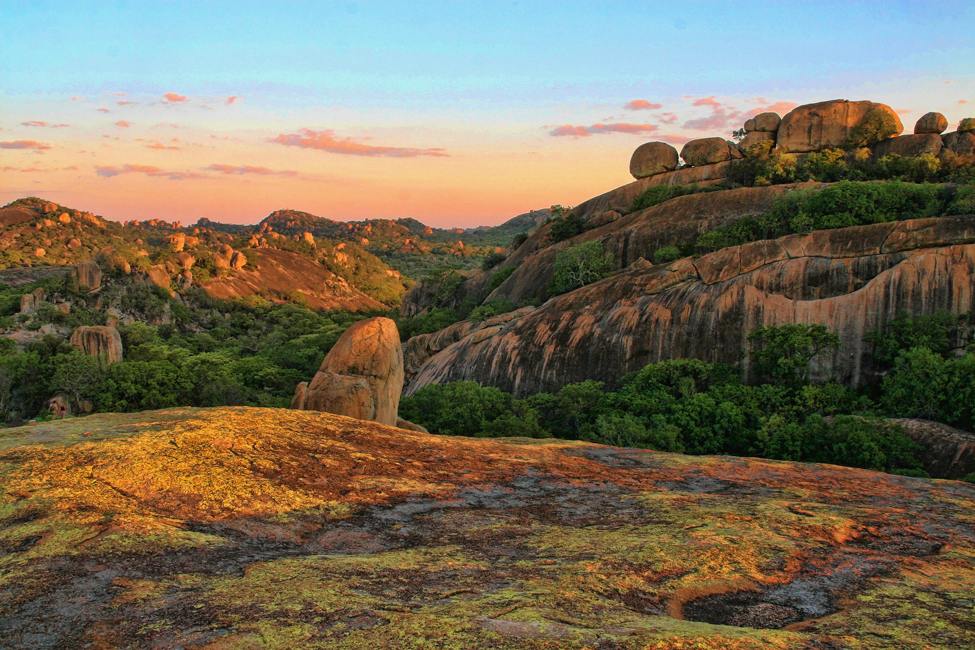
Looking for solitude and tranquility on your safari? Zimbabwe‘s remote southeast offers experiences far off the beaten path. Here you can explore the breathtaking landscape of Gonarezhou National Park—the country’s second largest park at 2,000 square miles. Or retreat to the smaller Malilangwe Wildlife Reserve on its northern corner.
Best known for its thriving elephant population, Gonarezhou encompasses savanna, woodlands, and red sandstone bluffs. The Chilojo Cliffs rise majestically above the Runde River valley below. From there, the river curves westward past the Sibonya Hills and feeds Chipinda Pools before flowing into Malilangwe Wildlife Reserve.
Whether you’re looking to witness wildlife on a game drive, hike through rugged terrain, or photograph stunning landscapes, Gonarezhou and Malilangwe promise an unforgettable experience.
Photos courtesy of Chilo Gorge Safari Lodge at Malilangwe Wildlife Reserve, Zimbabwe.
Wildlife of Gonarezhou and Malilangwe
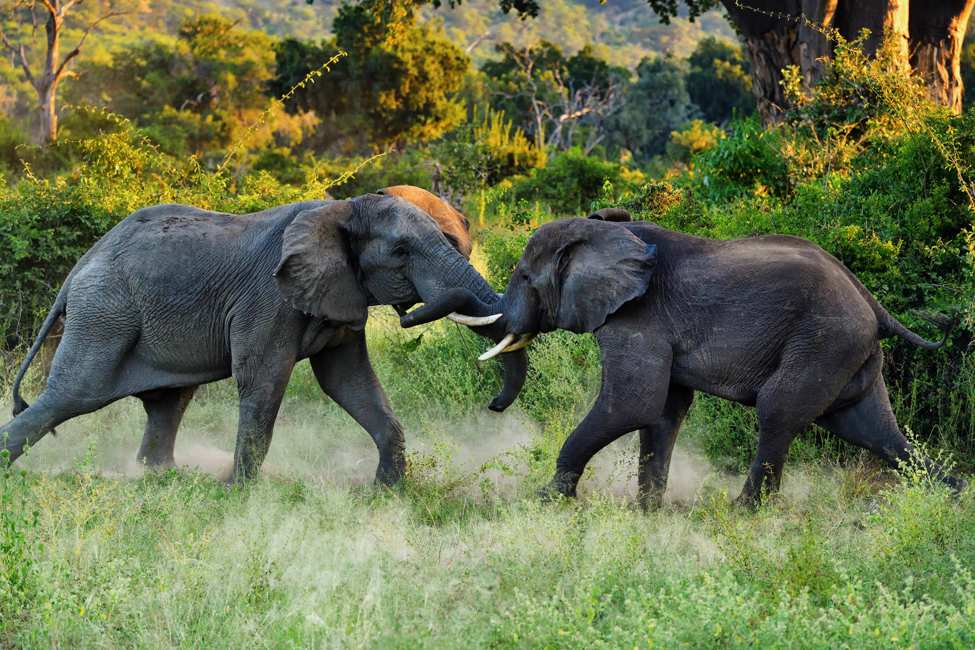
The name “Gonarezhou” means “the place of many elephants” in the local Shangani language. There’s a good reason: more than 10,000 elephants live here. Large herds are often seen roaming near the rivers and in the woodlands.
Rhinos are big here, too. The area has representatives of both African rhinoceros species—black and white. Gonarezhou reintroduced black rhinos in 2021 and aims to be the first Zimbabwe park with a self-sustaining population of the species. Meanwhile, Malilangwe has been so successful since first reintroducing rhinos in 1998 that it has been able to send some of the animals to other parks in Africa. This helps restore rhinos to more areas and adds more genetic diversity to isolated groups, keeping rhino populations healthy and adaptable.
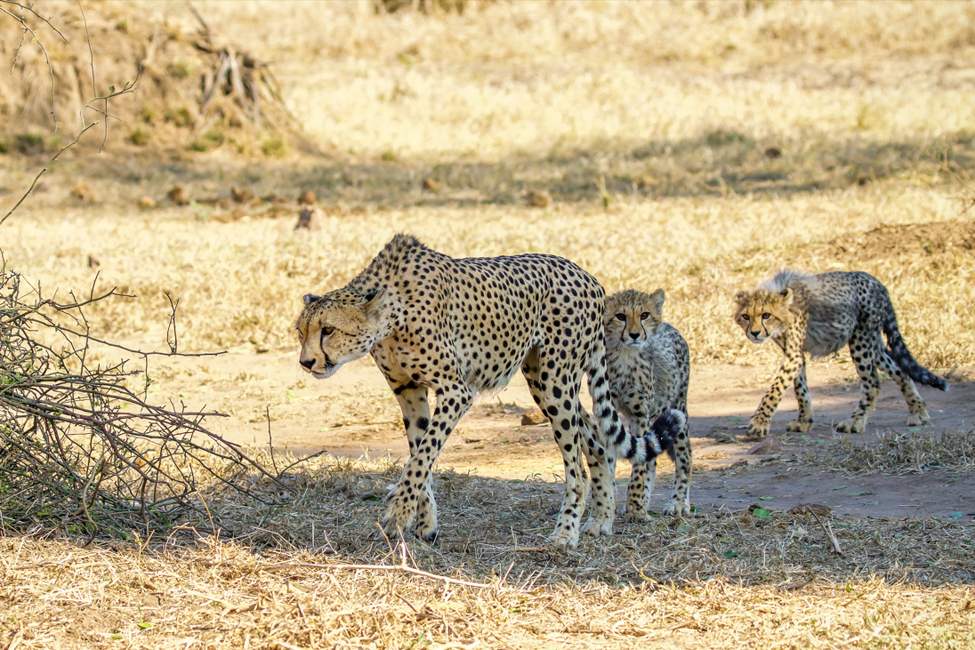
Gonarezhou and Malilangwe are home to the rest of the Big Five (lions, leopards, and Cape buffalos in addition to elephants and rhinos). The area’s almost 90 large mammals include African wild dogs (also called painted wolves), cheetahs, sable antelopes, kudus, impalas, warthogs, and zebras.
With more than 450 recorded bird species—including 60 raptors—Gonarezhou and Malilangwe are fantastic destinations for birdwatchers. Key species to look for include the African fish eagle, saddle-billed stork, secretary bird, ground hornbill, and white-backed vulture.
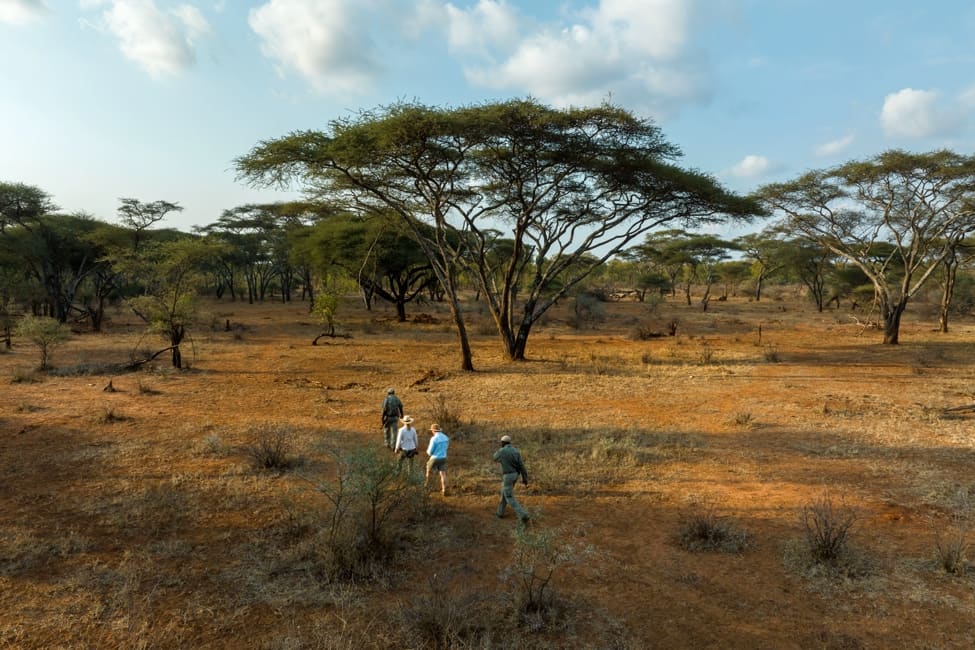
Photo courtesy of Singita Pamushana Lodge at Malilangwe Wildlife Reserve, Zimbabwe.
How Visiting Gonarezhou & Malilangwe Supports Conservation
When you visit Gonarezhou and Malilangwe, you support the conservation of its important wildlife. Your spending pays for rangers, anti-poaching patrols, habitat preservation, and wildlife rehabilitation.
You are also supporting a key initiative to protect important migration corridors. Gonarezhou and Malilangwe are part of the Great Limpopo Transfrontier Park. This conservation area spans multiple parks in Zimbabwe, Mozambique, and South Africa. Connections between these parks allow animals to move freely when food or water become sparse in one place—boosting their chances of survival.
Finally, the park and reserve benefit local residents. More than three-quarters of park, reserve, and lodge staff are from nearby communities. Through its Neighbour Outreach Programme, Malilangwe Wildlife Trust improves access to nutritious food, clean water, educational opportunities, and healthcare. It also helps young people develop leadership, conservation, and job skills, with many participants going on to work at the reserve or attend university after completing secondary school.
Besides fostering better lives for people, such initiatives help decrease poaching and build community support for conservation.
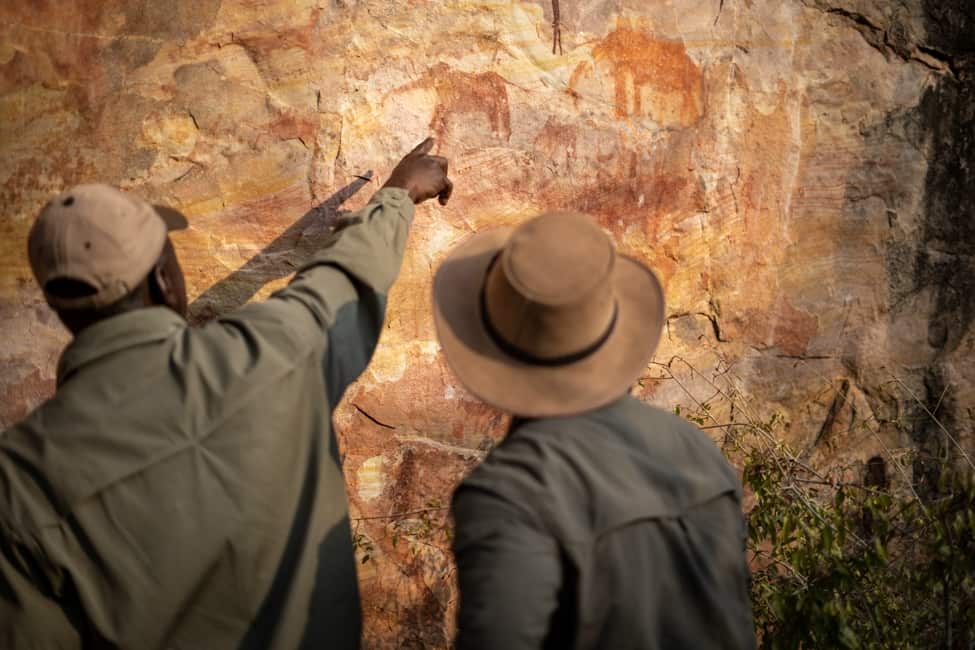
Photo courtesy of Singita Pamushana Safari Lodge at Malilangwe Wildlife Reserve, Zimbabwe.
Favorite Things to Do in Gonarezhou & Malilangwe
Game drives are the most popular activity in Gonarezhou, and for good reason. They can cover a lot of ground, letting you experience the diversity of Gonarezhou’s many ecosystems. Ironwood and miombo woodlands, mixed scrubland, and ilala palm forest attract a distinctive mix of wildlife.
While you can take a self-guided game drive if you have rented a vehicle for your trip, we prefer guided game drives. They generally take place in the early morning and late afternoon when animals are most active. Your guide’s expertise gives you the best chance of amazing wildlife sightings.
Walking safaris connect you with the park in a more intimate way. Your guide will show you some of the local flora and smaller creatures that often go unnoticed on a game drive—the park is home to more than 60 species of small mammals. They also provide great opportunities to view larger animals from a safe distance.
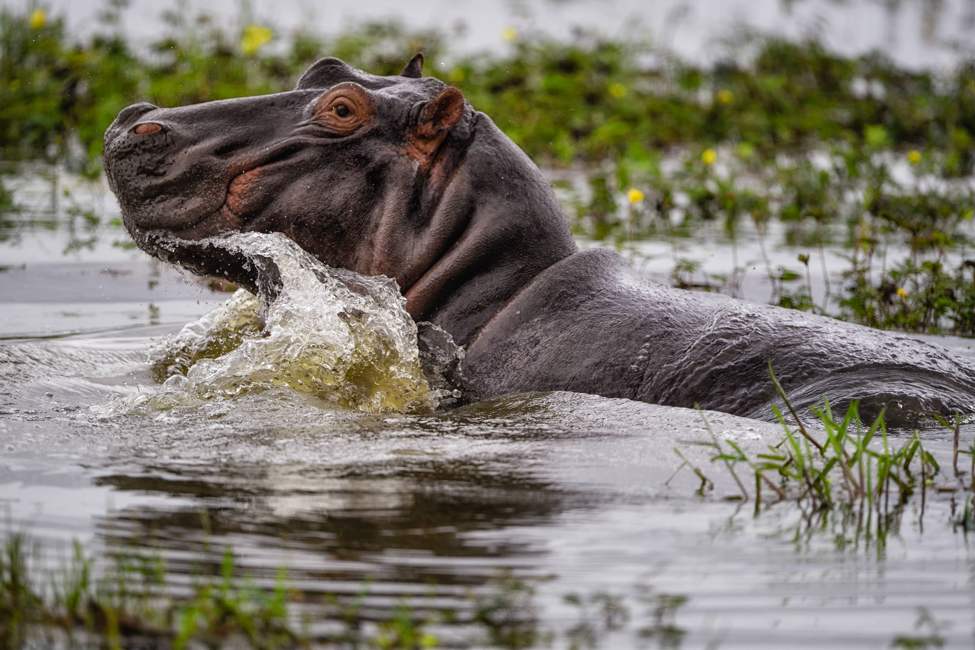
The park’s rivers—which include the Save, Runde and Mwenezi—are teeming with wildlife. A boat safari affords great views of hippos, crocodiles, and a variety of bird species in an environment of peace and serenity.
At Malilangwe Wildlife Reserve, you can enjoy a visit to Kambako Living Museum of Bushcraft to learn about the traditional survival skills the local Shangaan people. Through live demonstrations, you may experience fire‑making, use of wild plants, tool‑making, and weaving.
Both Gonarezhou and Malilangwe have numerous rock art sites. These were made over the past two millenia by San (Bushman), Khoikhoi, and Bantu artists. The San art depicts human and animal figures painted with brushes, while the Khoikhoi and Bantu art is more geometrical and was usually finger-painted. This is one of the few places in southern Africa to have rock art depicting double-headed animals.
Stargazing and simply lounging about your lodge to enjoy the scenery are other activities you’re sure to enjoy.
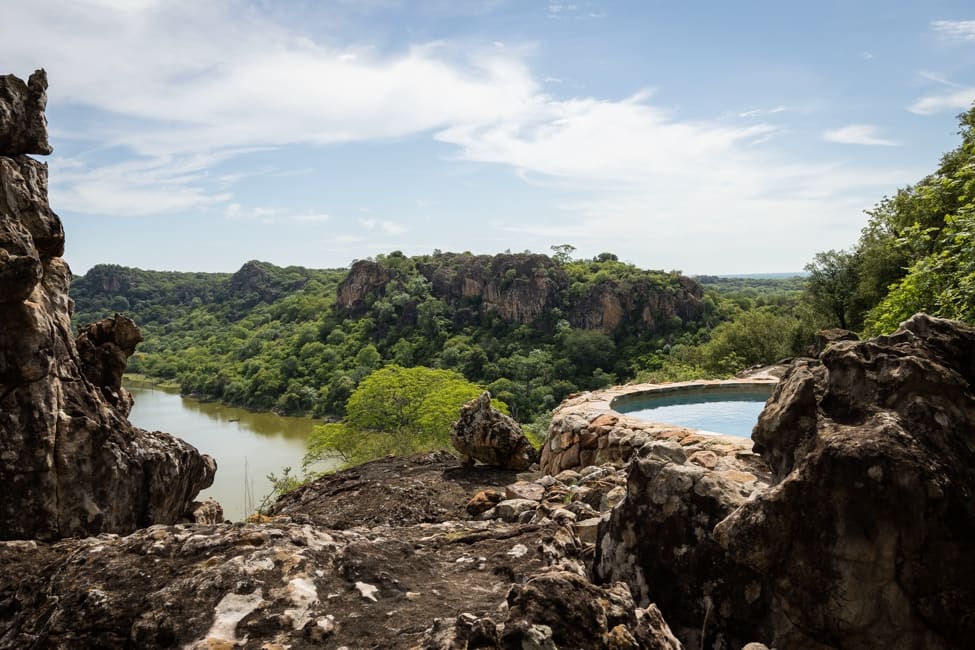
Photo courtesy of Singita Pamushana Safari Lodge at Malilangwe Wildlife Reserve, Zimbabwe.
Explore Gonarezhou & Great Limpopo Transfrontier Conservation Area
Visiting Gonarezhou National Park
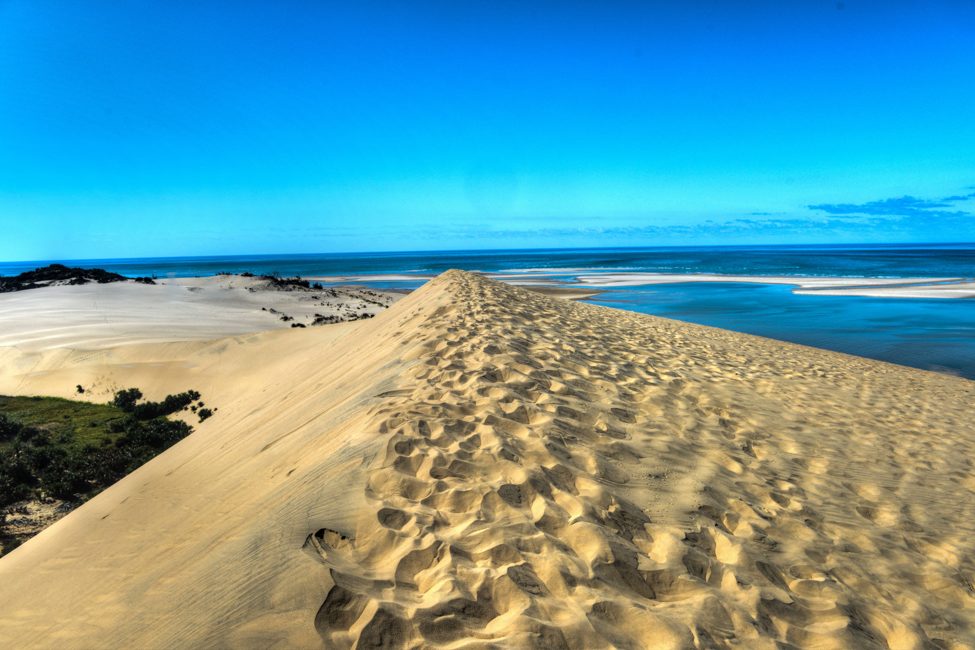
Unlike Zimbabwe’s more famous national parks, such as Hwange or Victoria Falls, Gonarezhou remains largely unknown. This means you can experience the park and neighboring Malilangwe in a more intimate way. Combining a visit to Gonarezhou and Malilangwe with visits to other parks in the Greater Limpopo Transfrontier Area, such as Kruger National Park in South Africa or Limpopo National Park in Mozambique, is an ideal way to explore this corner of Africa.
For most travelers, the dry season is best time to visit Gonarezhou or Malilanwe. It runs from May to October. This is when wildlife congregates around the river and waterholes, making it easier to spot animals. In addition, the park’s roads are more passable. The weather is generally cooler May through August and hotter in September and October.
The hot wet season from November to April brings lush greenery and a booming bird population, making it the perfect time for birdwatching. But some areas of the park may become inaccessible due to heavy rains.
If you’re looking for a safari experience that blends adventure, seclusion, and breathtaking beauty, Gonarezhou is the destination you’ve been waiting for. Let Ujuzi help you plan your visit. Contact us today for your consultation.

Sign up for the Ujuzi Newsletter!
From top travel tips to innovative safaris and conservation movement, get inspired to plan your next African safari!