

Queen Elizabeth National Park, the Crown Jewel of Wildlife Conservation
Nestled in the heart of southwestern Uganda, Queen Elizabeth National Park (QENP) has one of the highest biodiversity ratings of any game reserve in the world. With 95 kinds of mammals and hundreds of bird species—many unique to East Africa—it is a crown jewel of wildlife conservation.
The park was established in 1952 while Uganda was under British rule. Two years later Queen Elizabeth II visited the country, and QENP was renamed after her. As you explore the savannas, wetlands, forests, and crater lakes that stretch over the park’s 760 square miles, you’ll see why QENP is one of Uganda’s most beloved destinations.
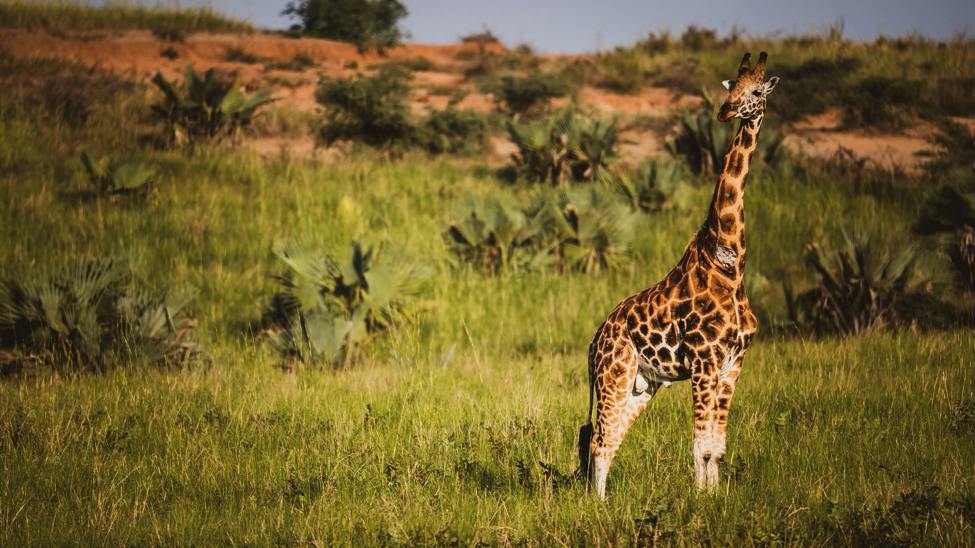
The Wildlife of Queen Elizabeth National Park
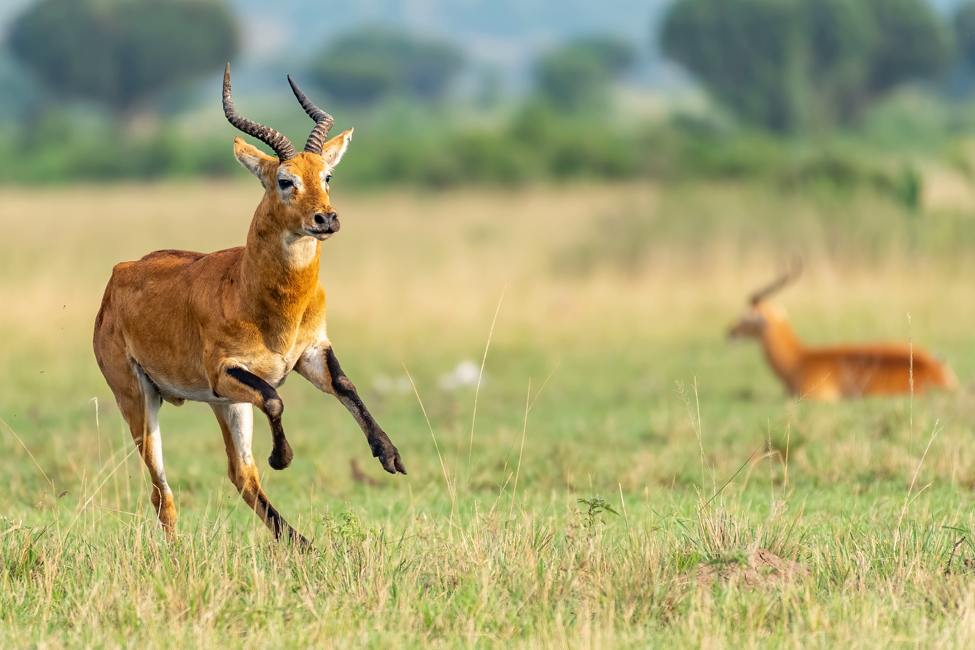
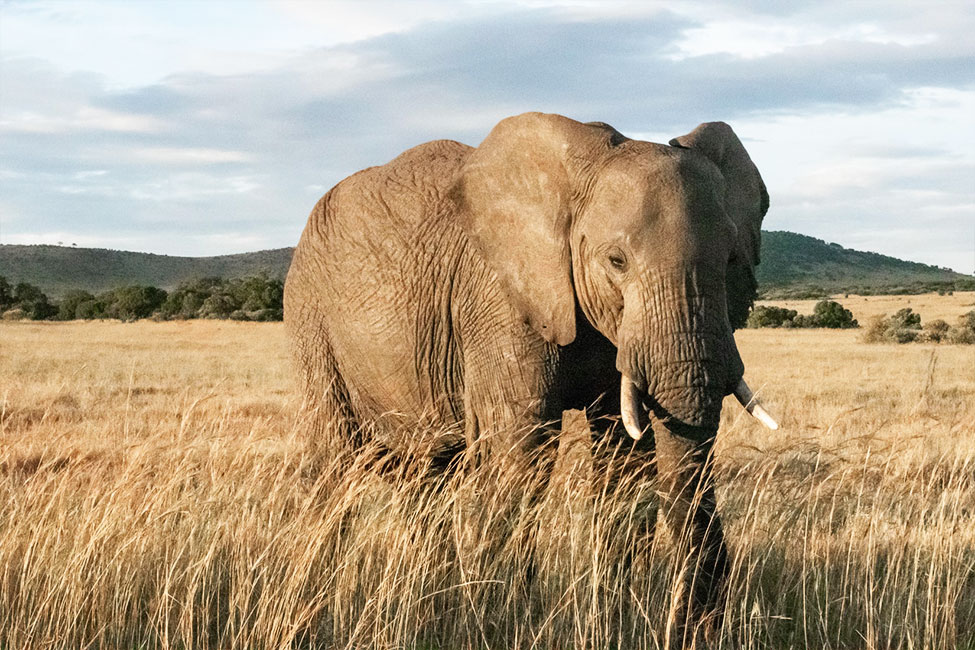
Queen Elizabeth National Park is home to an astonishing variety of wildlife, including chimpanzees, spotted hyenas, Nile crocodiles, warthogs, hippos, waterbucks, Ugandan kob, and four of the Big Five—elephants, lions, leopards, and Cape buffalos. The Cape buffaloes here are unique, with many having a red tinge to their coats thanks to a tiny bit of forest buffalo DNA. The two species intermingled many years ago when the Cape buffaloes’ ancestors traveled between the Democratic Republic of Congo and Uganda.
The Uganda Carnivore Program plays a key role in supporting the wildlife of the park and surrounding area. The organization started in the 1990s when lions in the park started dying of unknown causes. It was discovered that the animals were being poisoned. To address this threat, the organization conducts scientific research and community-based conservation. It monitors predators, educates nearby residents about the role of predators in local ecology, reduces human-predator conflict, and ensures that ecotourism benefits local communities.
If you love predators, Ujuzi can arrange special activities with the Ugandan Carnivore Program through the Uganda Wildlife Authority. These include daytime lion tracking and nighttime predator viewing—two truly memorable experiences.
Finally, more than 600 bird species inhabit QENP, making it one of the richest birding areas in East Africa. Birdwatchers can expect to see a range of species, from waterfowl like flamingos and papyrus gonoleks to grey-crowned cranes and various eagles.
The Many Facets of Queen Elizabeth National Park
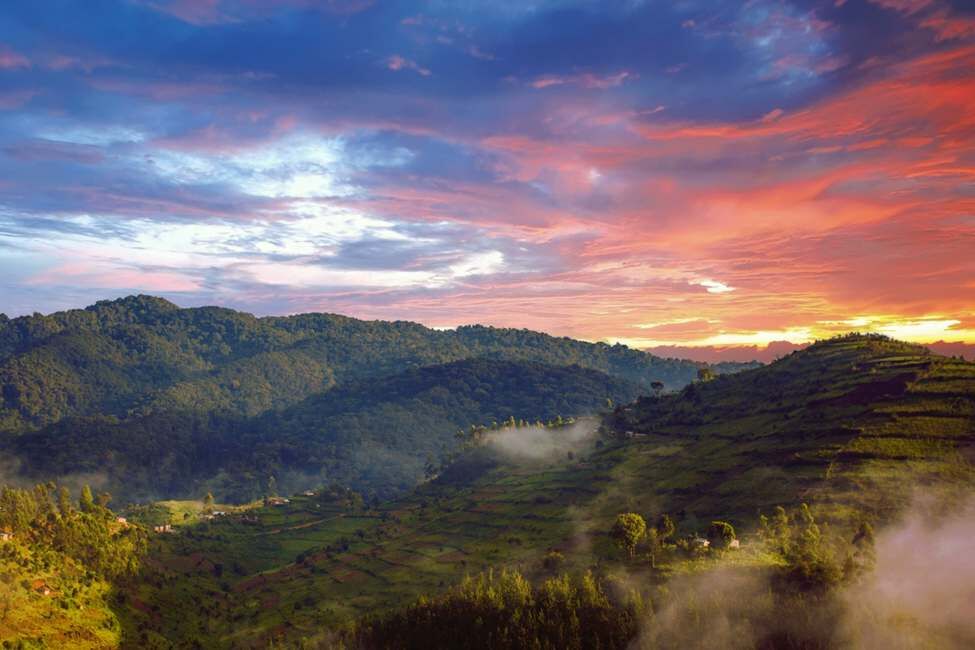
Queen Elizabeth National Park offers a variety of landscapes that allow visitors to fully immerse themselves in its stunning landscapes and rich biodiversity. From Mweya Peninsula to Karambura Gorge, the park has something to delight every visitor.
Mweya Peninsula
Mweya is the most-visited area of the park. It offers quick access to Lake Edward and the swirling Kazinga Channel, and you can even fly in here from other safari destinations thanks to a small airport and runway. Wildlife viewing is spectacular from land or water. With magnificent vistas of golden plains and towering volcanic mountains, Mweya offers countless opportunities for stunning photography.
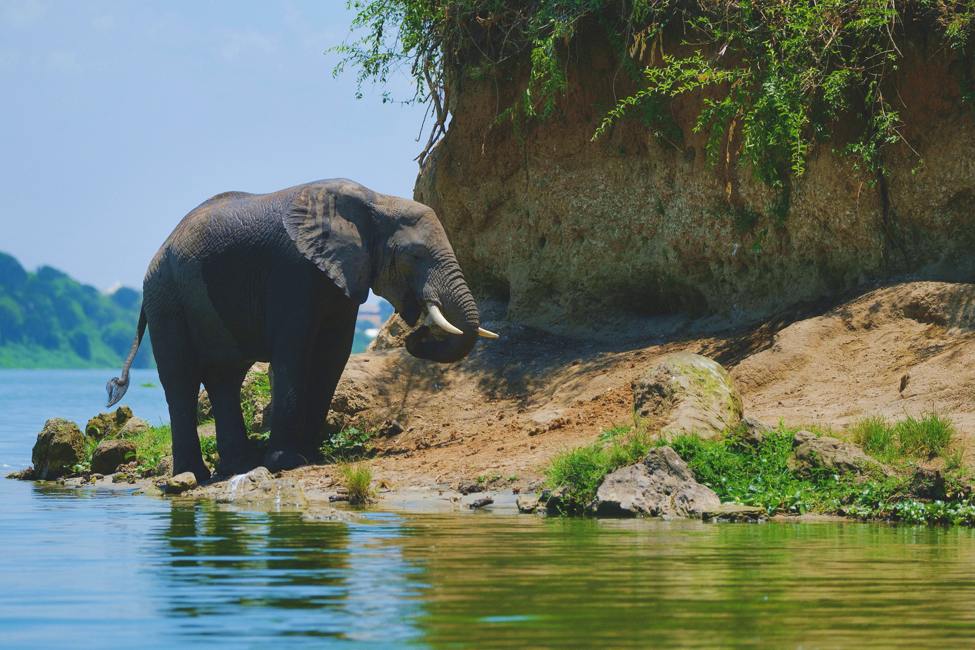
Kazinga Channel
The Kazinga Channel connects Lake George to Lake Edward. Boat cruises along this waterway provide frequent sightings of hippos, crocodiles, elephants, and Ugandan kob, among others. Birds are plentiful, too. Water thick-knee, yellow-billed stork, various plovers, white pink-backed pelicans, and white-bellied cormorants are among the channel’s inhabitants.
A boat outing is one of the highlights of our Uganda Great Ape & Wildlife Safari. Check it out for an idea of what a visit to Queen Elizabeth National Park can look like!
Channel Drive Circuit
Following the northern shore of the Kazinga Channel, these roads wind between tangled thickets interspersed with cactus-like euphorbia trees. The most common large mammals seen on game drives here are warthogs, bushbucks, waterbucks, elephants, hippos, and lions. Leopards are also a common sight in this section of the park, and this is one of the few places in Africa to see the giant forest hog during daylight.
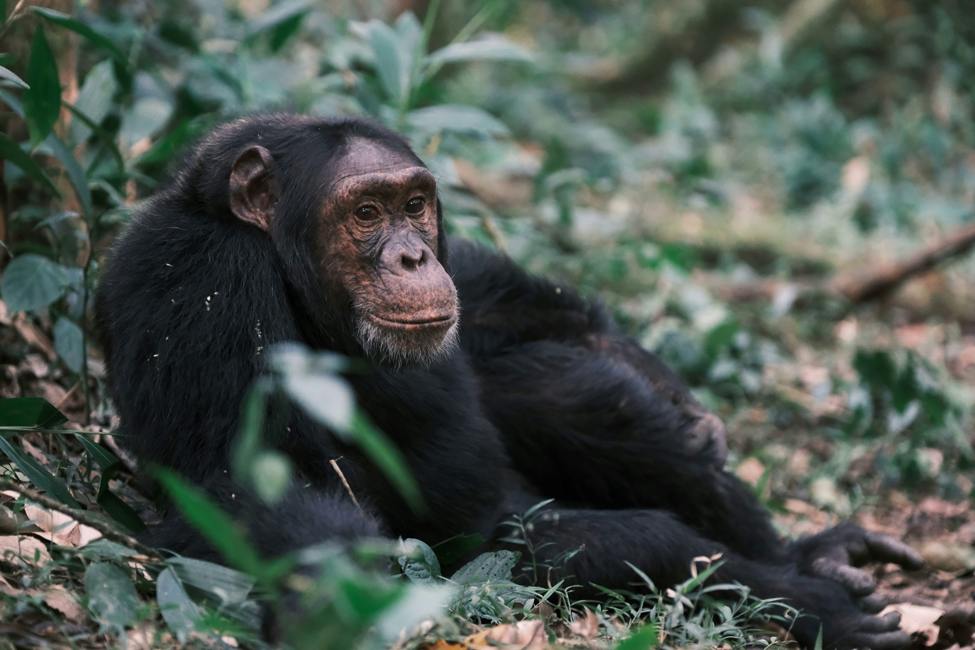
Kyambura Gorge
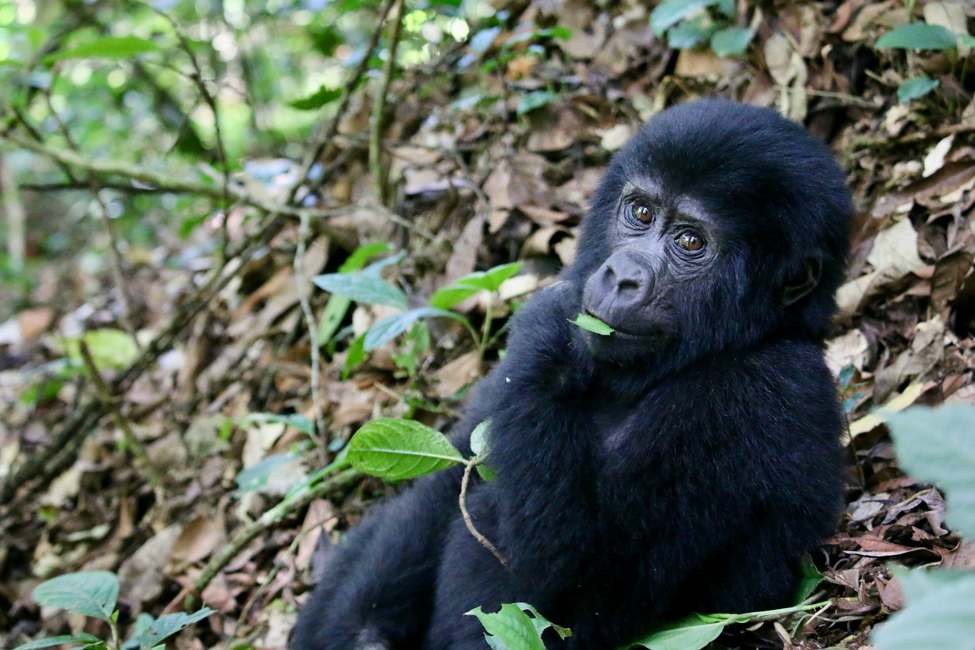
This striking landscape is home to chimpanzees and several monkey species. Take a chimpanzee trek through the virgin forest along maintained trails to observe these intelligent primates socializing and foraging in their natural habitat. Although the terrain can be steep, the experience is rewarding and adds a special touch to any safari.
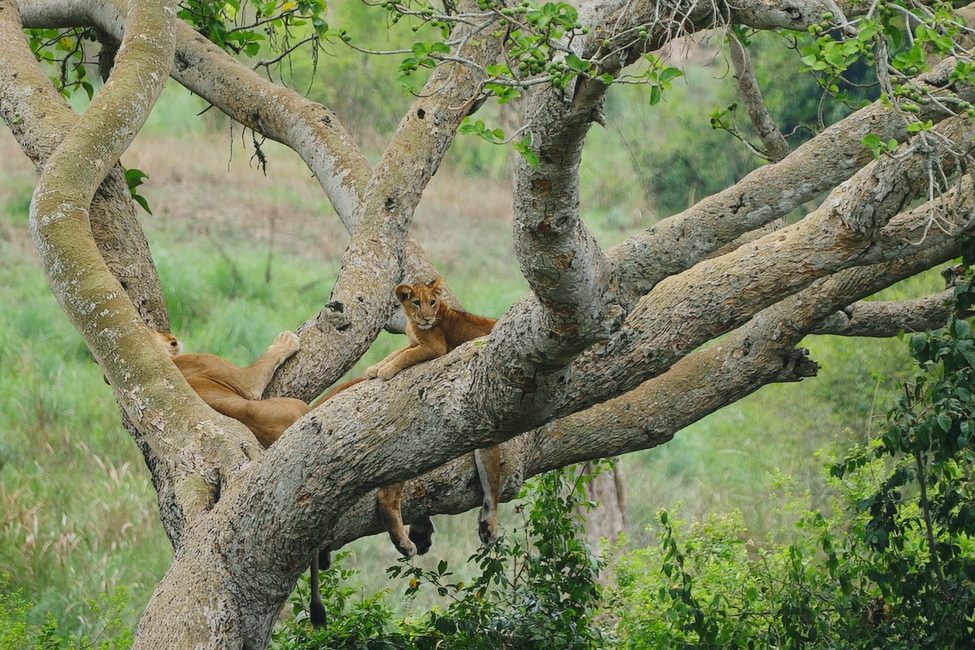
Ishasha Sector
The Ishasha sector’s fig-tree dotted savanna contrasts with the watery lushness of Mweya. The wildlife is different here, too—most notably the lions, who engage in the unusual behavior of climbing the trees and then lounging in them for much of the day.
A game drive in the Ishasha sector is a must. Not only are you likely to find these majestic predators lounging in the trees, but can also spot elephants, zebras, Cape buffaloes, Ugandan kob, and various other antelope species.
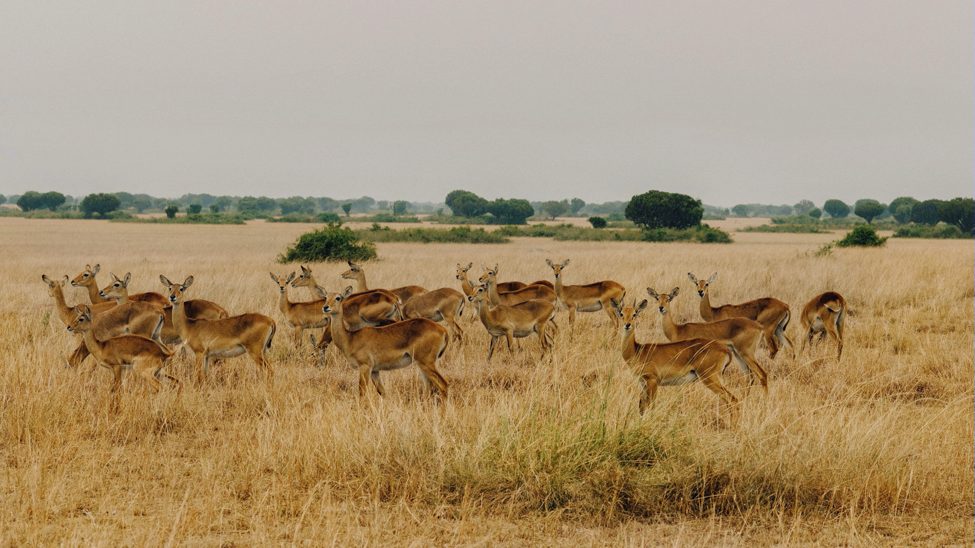
Kasenyi Plains
This area of classic African savanna north of Lake George plays host to huge herds of herbivores, including elephants, buffaloes, and topis, as well as grassland birds like grey-crowned cranes, red-throated spurfowls, and yellow-throated longclaws.
Maramagambo Forest
As one of the largest forests in Uganda, Maramagambo is home to excellent birdwatching—African paradise-flycatcher, anyone? You can enjoy nature walks here on well-defined paths while looking for smaller safari animals. Stop at the scenic viewing points, including one overlooking a cave where thousands of fruit bats roost.
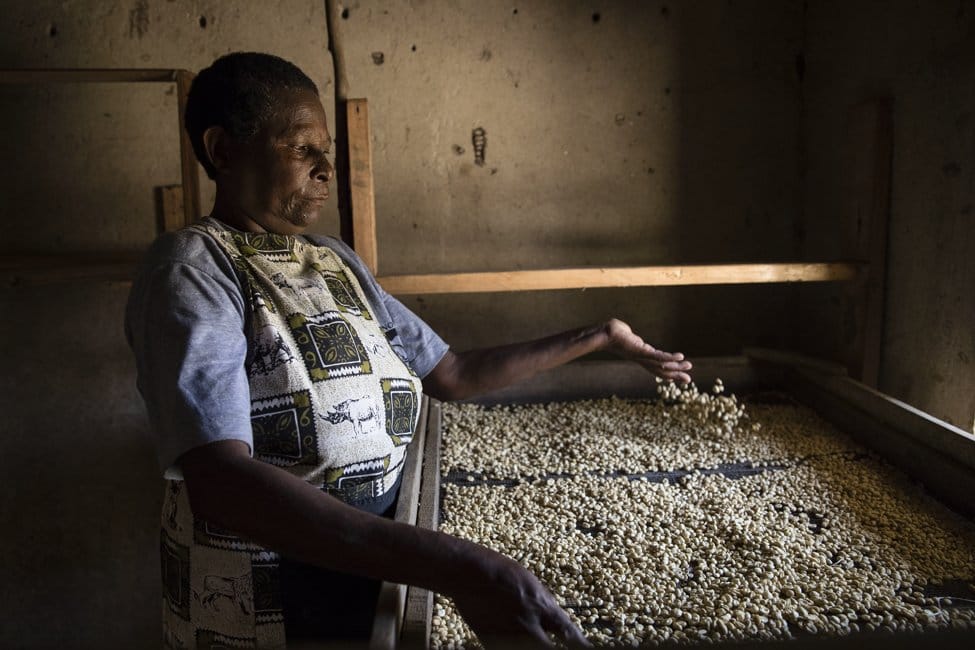
A member of Kyambura Women’s Coffee Cooperative near Queen Elizabeth National Park processes coffee beans. Photo courtesy of Volcanoes Safaris’ Kyambura Lodge.
Cultural Tours and Community Visits
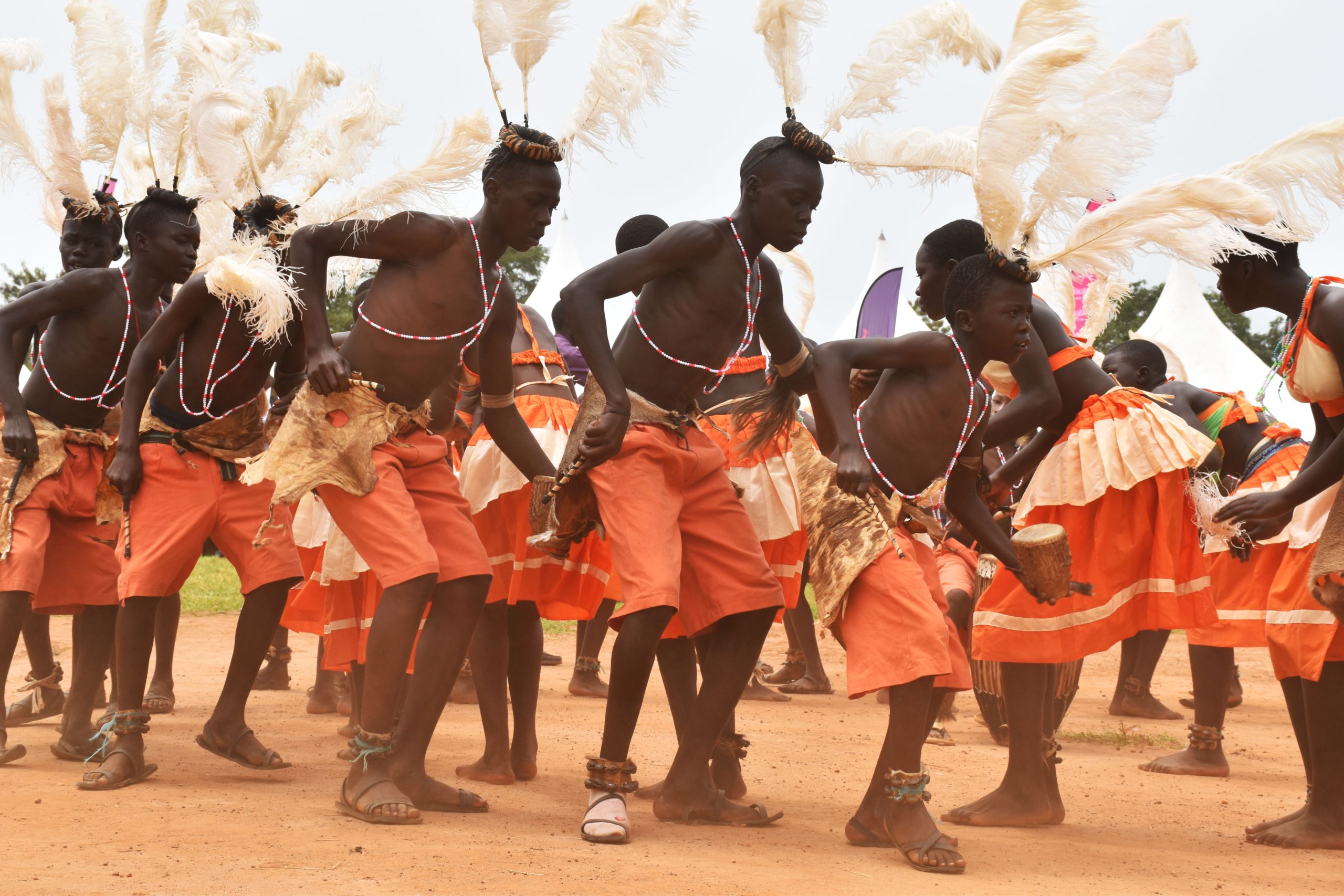
Queen Elizabeth National Park is also rich in cultural history. The park is located near villages where Bakiga, Basongora, and Banyaruguru peoples live. Here are some of our favorite ways to learn about local culture:
- Katwe Salt Lake, near Queen Elizabeth National Park, is home to Uganda’s oldest industry. Salt mining here dates back to the fourteenth century. At Katwe, you can watch salt being mined using traditional techniques.
- Visit a village on the shores of Lake George to learn what is involved in the day-to-day life of a Ugandan fishing community.
- Kyambura Women’s Coffee Cooperative tends a coffee farm and processing plant on 100 acres near Queen Elizabeth National Park. Visit the cooperative to meet the women who run the co-op and learn how their business helps protect the local population of chimpanzees.
Explore Uganda on These Safaris
Visit Queen Elizabeth National Park
You have several options for getting to Queen Elizabeth National Park. It is a short drive from the city of Kasese. You can also fly in from Uganda’s capital city of Kampala or another national park.
Going by road from Kampala is another option. There are two main routes: a northern route that goes through Forth Portal and a southern route that goes through Mbarara. Both routes are about 250 miles and take about eight hours. Many travelers opt to stop for a day or two at one of the parks en route, such as Lake Mburo National Park to the south or Kibale National Park to the north.
The best time to visit Queen Elizabeth National Park is during the dry seasons, from June to September and December to February. These months offer optimal wildlife viewing conditions, as animals tend to congregate around water sources. However, the park is open year-round, and its beauty and wildlife are compelling no matter when you visit.
Ready to embark on an adventure of a lifetime? Queen Elizabeth National Park awaits. Contact Ujuzi today.

Sign up for the Ujuzi Newsletter!
From top travel tips to innovative safaris and conservation movement, get inspired to plan your next African safari!