

Exploring Kenya’s Dry Country Gems: Samburu, Shaba & Buffalo Springs
As you descend from Nairobi toward the Ewaso Ng’iro River in Kenya‘s central highlands, the landscape changes from lush green forests to arid savanna. You can explore this spectacular ecosystem in three parks along the Ewaso Ng’iro: Samburu National Reserve, Shaba National Reserve, and Buffalo Springs National Reserve.
In these protected areas, you’ll encounter a combination of wildlife unique to this part of East Africa. From dry-country specialists like the endangered Grevy’s zebra to river-loving elephants and hippos, a diversity of animals awaits your visit!
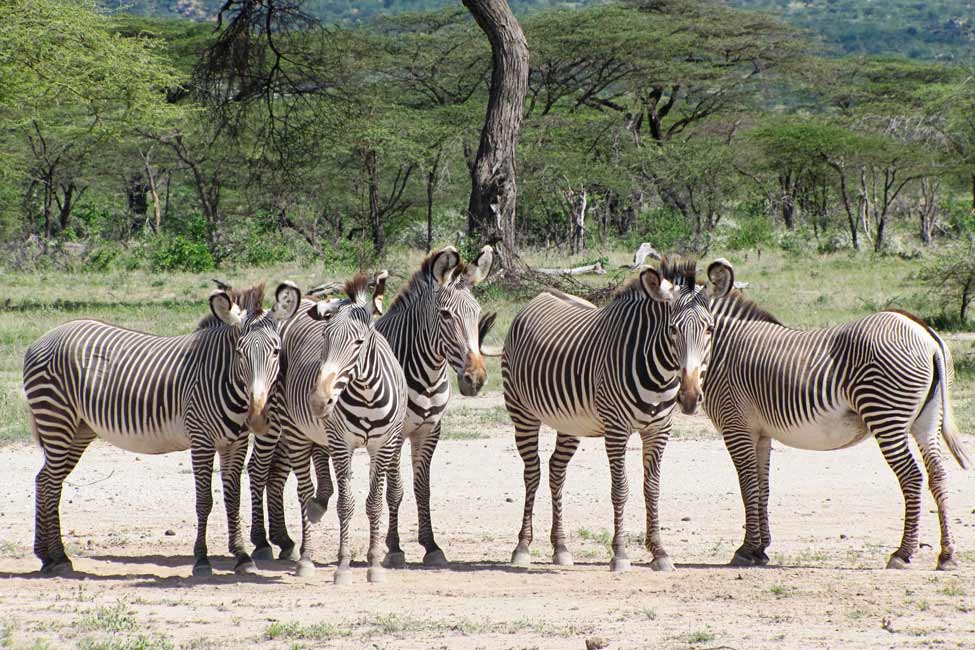
A group of Grevy’s zebras gather at Shaba National Reserve, Kenya.
Kenya’s Trio of Dry-Country Reserves
Samburu, Shaba, and Buffalo Springs share an ecosystem of rugged hills, grasslands, and riverine forest. But each is unique in its own right. Most safari-goers in central Kenya visit at least two of the reserves for a more varied experience.
Samburu National Reserve
Of the three reserves, Samburu National Reserve is the most famous. Set between craggy mountains and the fertile forest surrounding the Ewaso Ng’iro River, Samburu is a standout for gorgeous scenery, marvelous birding, and reliable elephant viewings.
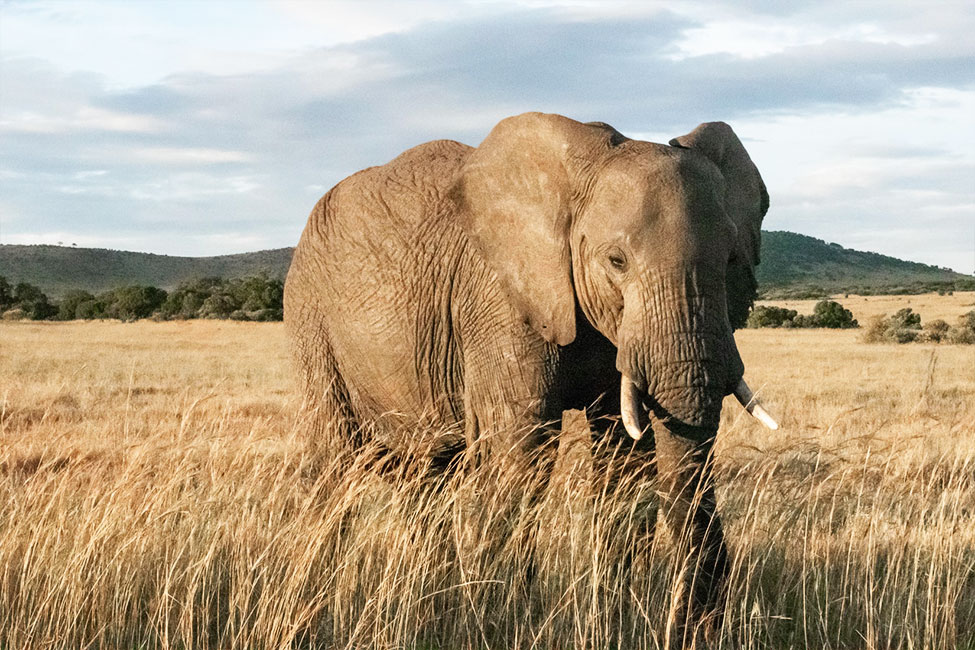
Along with Buffalo Springs, Samburu is particularly suited to first-time safari-goers set on seeing as many animals as possible—especially elephants, who often congregate around the river here.
Buffalo Springs National Reserve
Renowned for incredible leopard sightings among its rugged backdrop of umbrella thorns, Buffalo Springs National Reserve lies south of Samburu on the opposite bank of the Ewaso Ng’iro. The park’s namesake springs are on the western side of the reserve and form a gathering place for thirsty wildlife.
With a breathtaking landscape formed by hardened lava millennia ago, Buffalo Springs supports wildlife as plentiful as that in Samburu. However, it is smaller than Samburu or Shaba and attracts more visitors per square mile. That means you are more likely to run into other safari vehicles while out on wildlife-viewing drives than at Samburu or Shaba. Still, you’re not going to encounter any traffic jams in the park. And Buffalo Springs’ small size means you can cover more ground than at the larger reserves.
Shaba National Reserve
Lying to the east of Samburu, Shaba is the least-visited of the three reserves. This gives you a true feeling of being in the wilderness. (Just ask the cast of the reality TV competition Survivor—its third season was filmed here.)
The landscape is gorgeous, with the extinct volcano of Mount Shaba rising up from the plains and an array of giant euphorbias dotting the dry earth. These fascinating, other-worldly plants are the eastern hemisphere’s answer to the cactus. By storing huge amounts of water in their stems, they can easily survive dry spells. Like cacti, euphorbias are often dotted with sharp prickers and brightly colored flowers—although the flowers are typically smaller and less showy than cactus blooms.
Animals are a little harder to spot in Shaba than in Buffalo Springs and Samburu. They tend to congregate in smaller numbers here, and the proliferation of rocky outcrops and thick scrub can make it more challenging to reach them. But Shaba’s arid beauty and isolation make it a favorite among seasoned safari-goers looking for something off the beaten path.
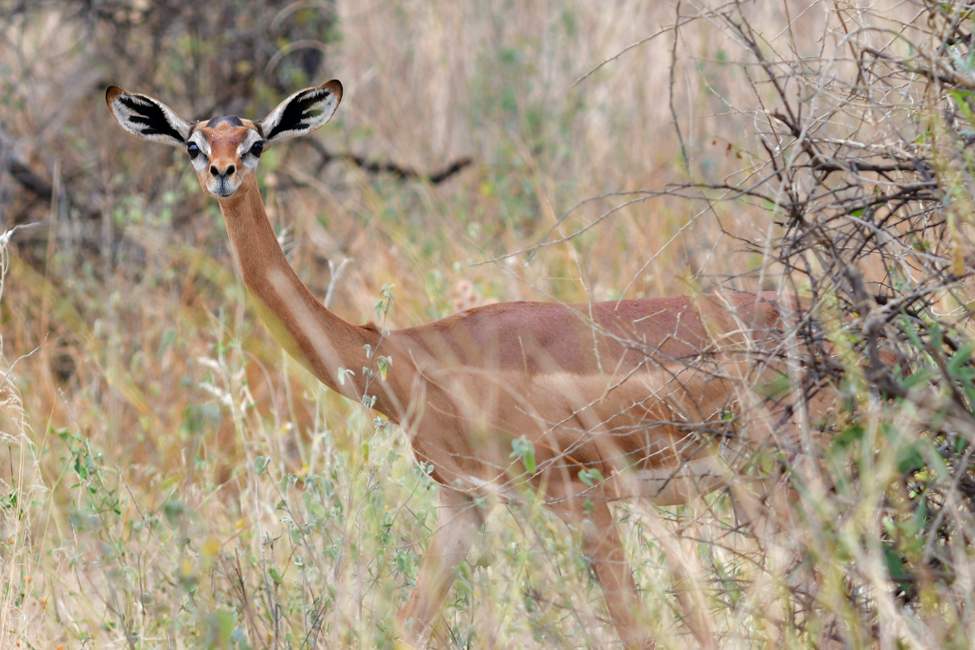
The fascinating gerenuk antelope is found in Samburu, Shaba, and Buffalo Springs National Reserves. Photo by Panegyrics of Granovetter.
Wildlife of Samburu, Shaba & Buffalo Springs
Samburu, Shaba, are Buffalo Springs are home to abundant wildlife, including four of the Big Five (elephants, Cape buffalo, lions, and leopards), several of the Little Five safari animals, and more than 450 bird species. The lesser kudu is fairly common, and lucky safari-goers may even get to see a cheetah, striped hyena, or pack of painted wolves (also known as African wild dogs).
But the three reserves may be best known for the “Special Five”—dry-country animals not found in many other parts of Kenya:
- Gerenuk. Sometimes called the giraffe-necked antelope, this elegant creature reaches the upper branches of large shrubs and small trees by standing on its hind legs and stretching out its long neck.
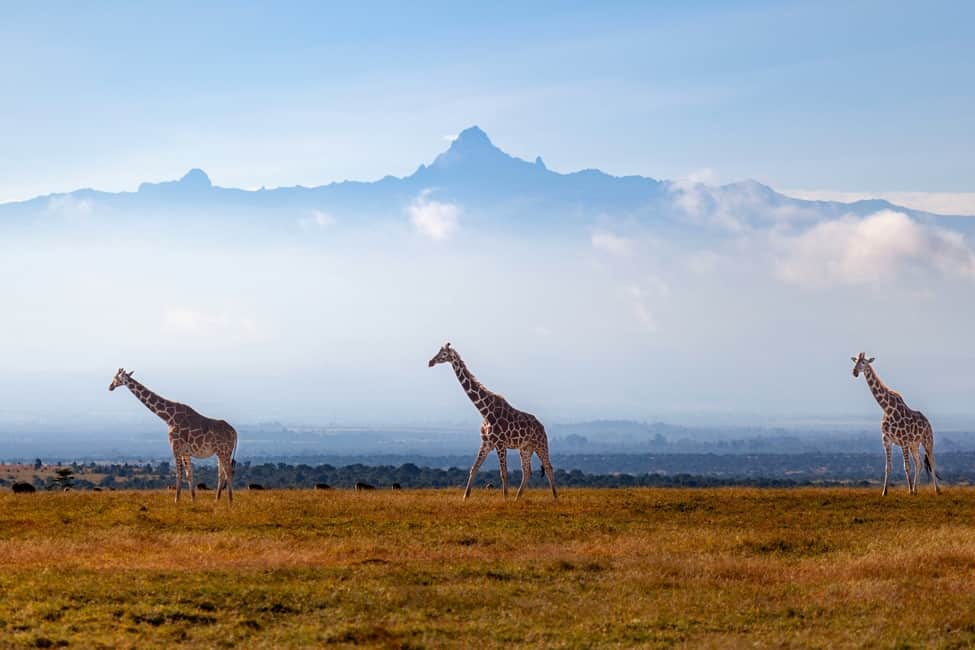
- Reticulated giraffe. Most giraffes have a pattern of dark spots on a light background. The reticulated giraffe is different, with a dark reddish-brown coat broken up by a web of thin, pale lines.
- Grevy’s zebra. This subspecies of zebra is the world’s largest wild equine. It also has larger ears than other zebras and a coat with more and thinner stripes. You may spot Grevy’s zebras grazing in the sun or cooling off with refreshing dust baths.
- Beisa oryx. This subspecies, Oryx beisa beisa, is more common in Ethiopia and South Sudan. It is related to the fringe-eared oryx of southern Kenya and northern Tanzania, but has a more dramatic coat pattern and prefers slightly drier environments.
- Somali ostrich. A different species than the common ostrich found in other parts of Africa, the Somali ostrich stands out because the legs and neck of adult males are blue! Somali ostriches also prefer eating from bushes and shrubs, while common ostriches tend to eat grass.
Spotting these unique species adds an extra thrill to a Kenyan safari.
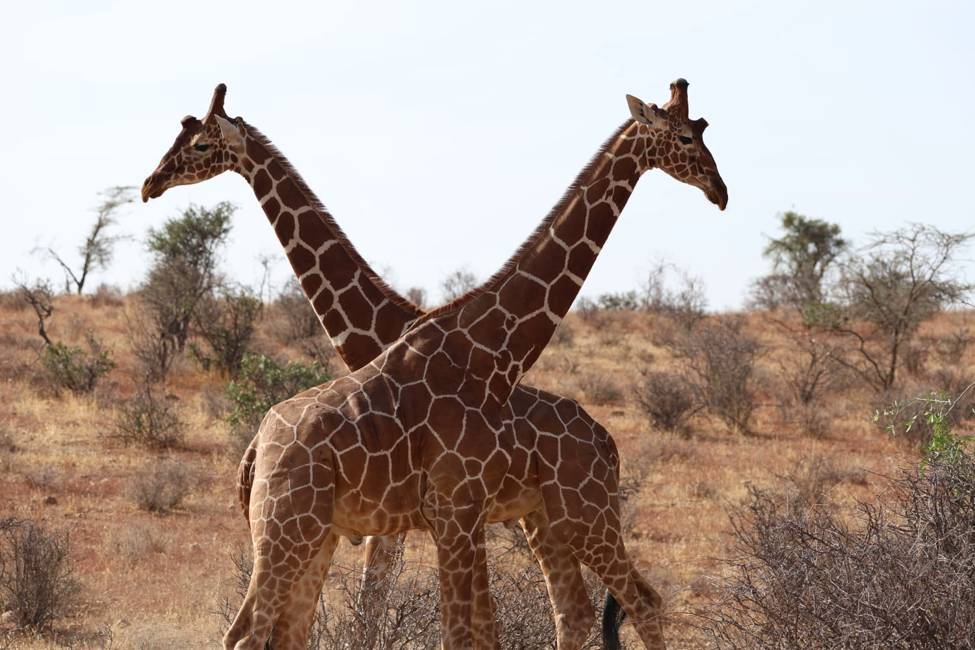
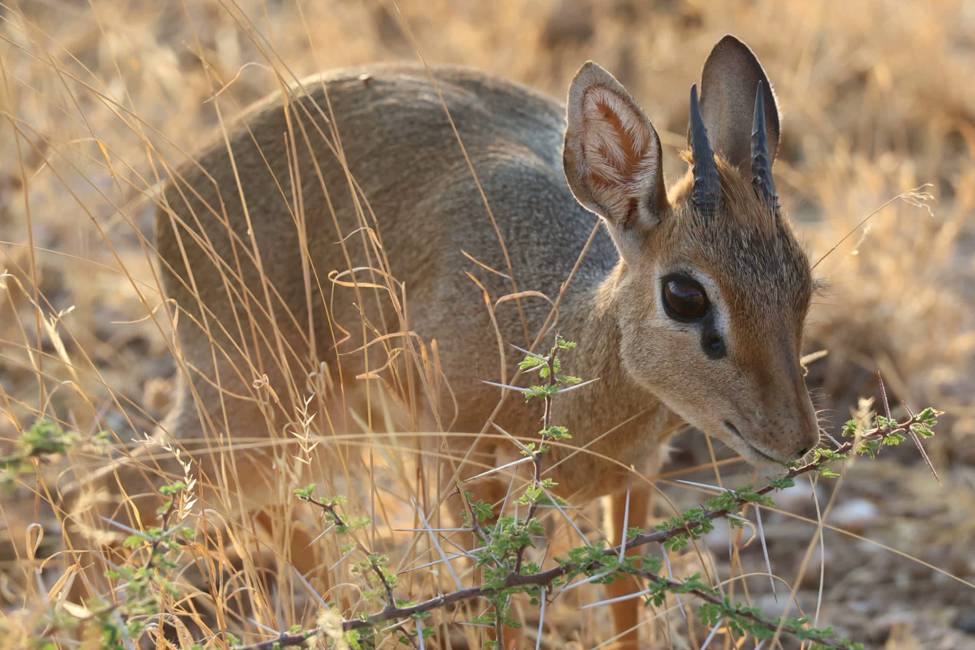
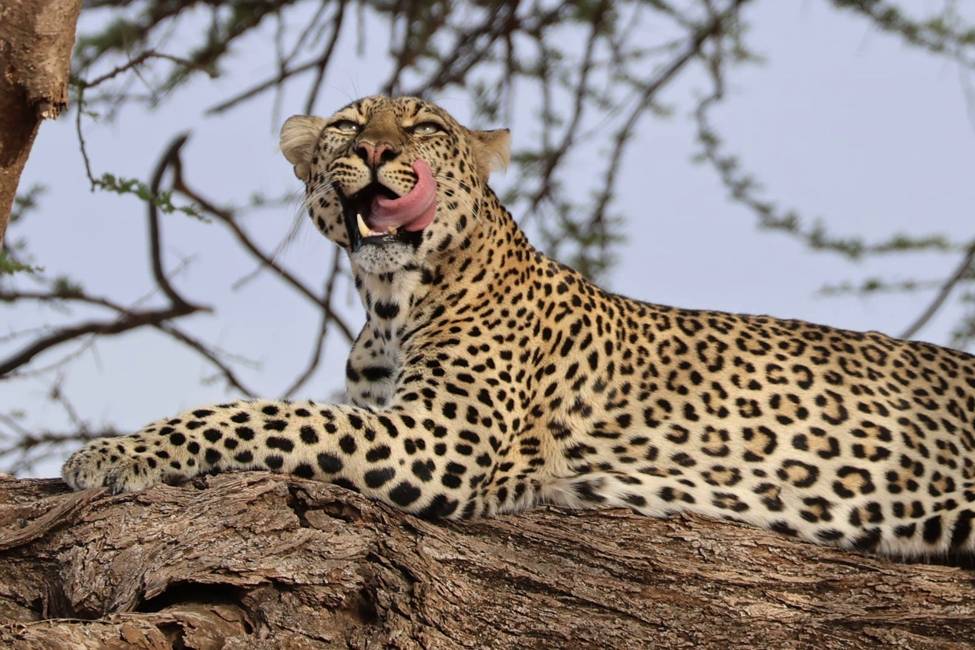
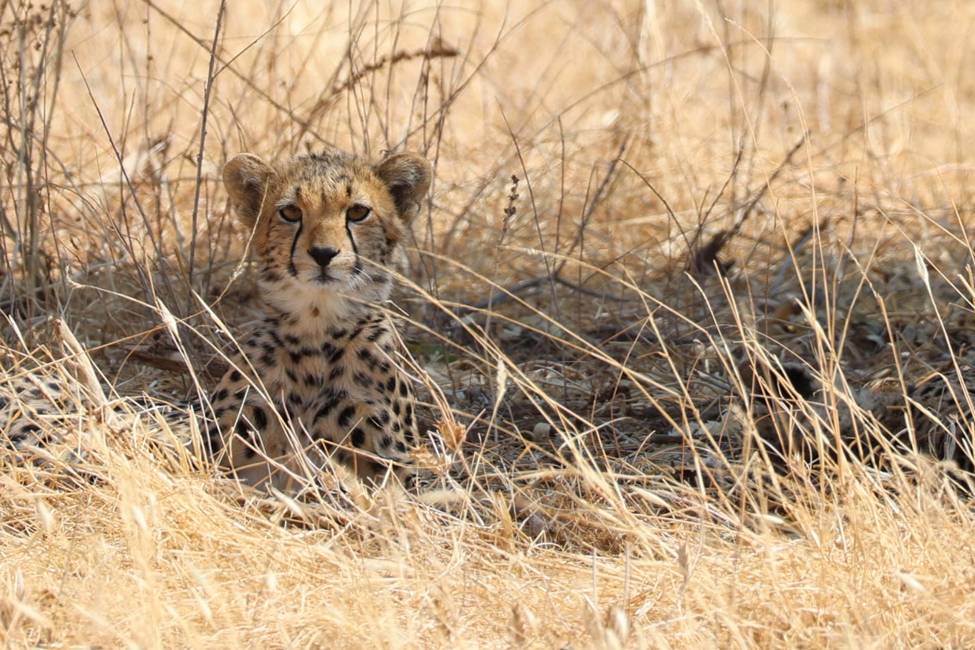
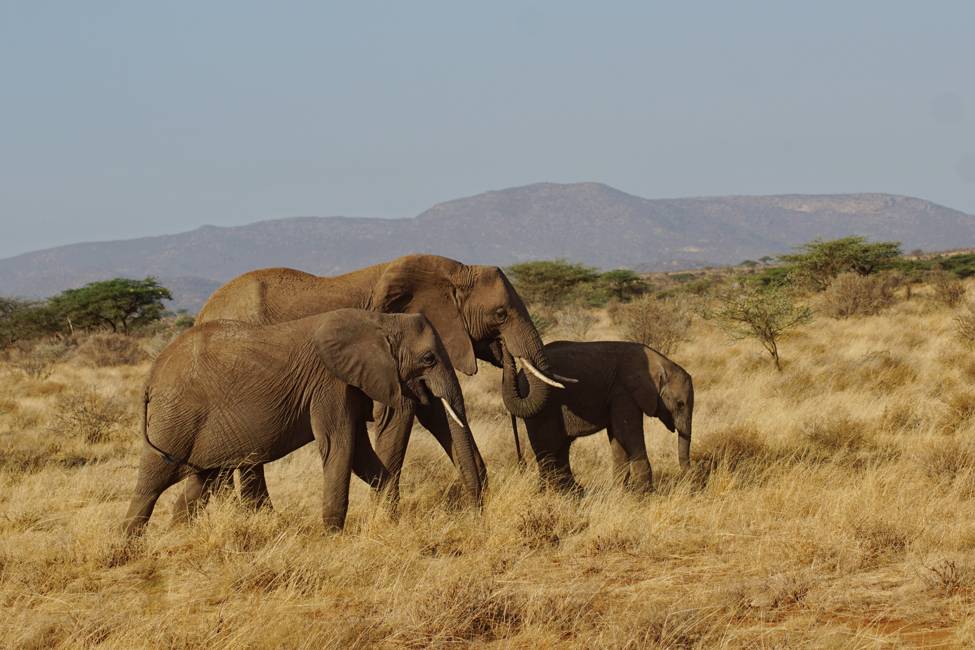
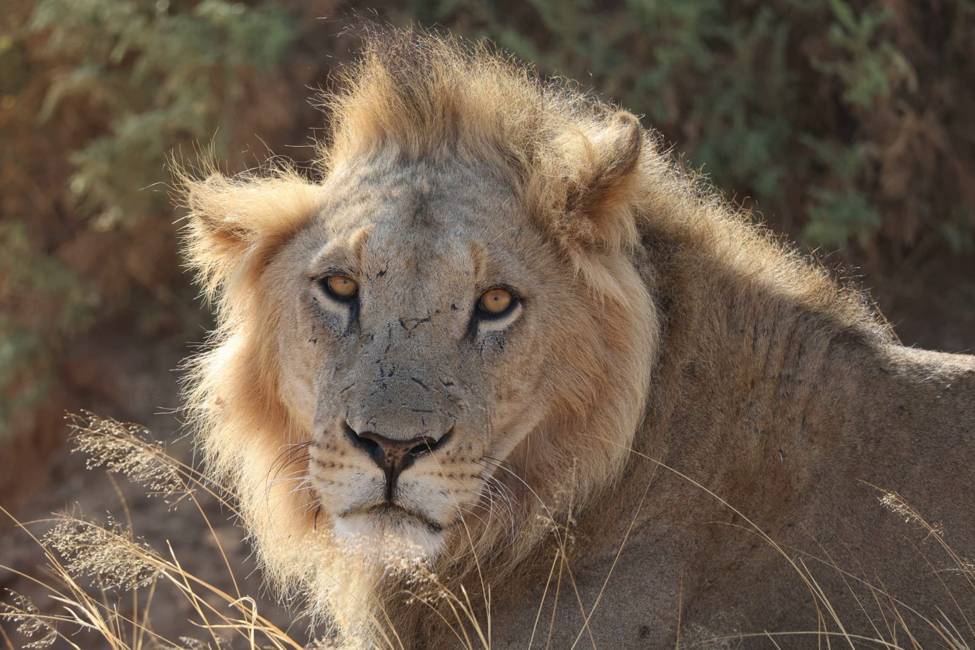
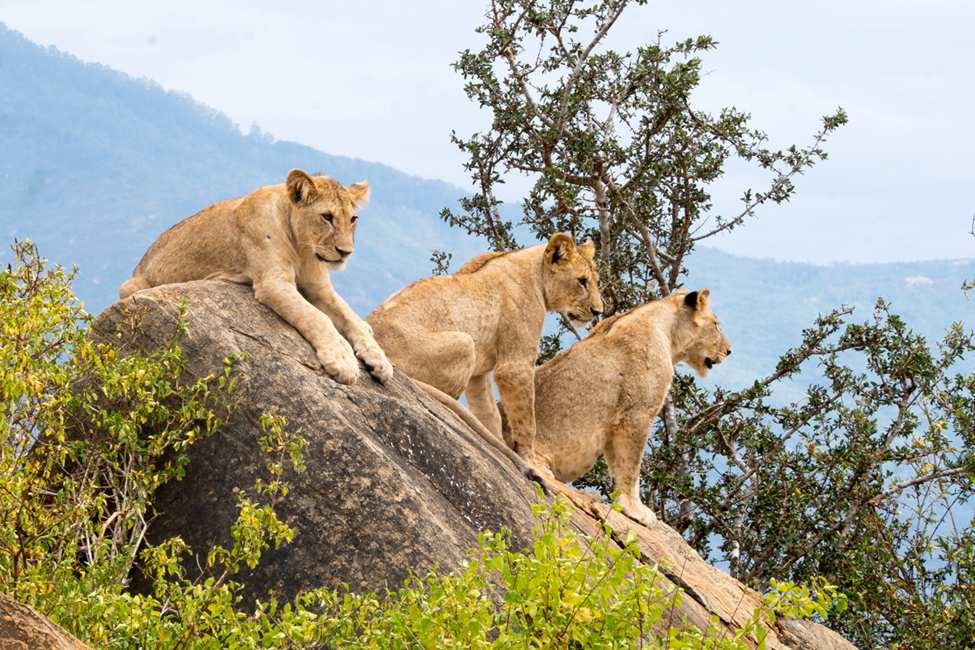
Reticulated giraffes, dik-diks, leopards, cheetahs, elephants, and lions are just some of the animals awaiting you in central Kenya’s dry country. These photos were taken in Buffalo Springs and Samburu by Ujuzi travelers in a group led by Jodi Carrigan, senior zoo keeper at Zoo Atlanta.
What to Do at Samburu, Shaba & Buffalo Springs
The Ewaso Ng’iro River attracts animals year-round, making it a prime destination on early morning and late afternoon game drives. As you explore, you might witness a pride of lions lounging in the shade or a herd of elephants splashing in the river.
Guided nature walks allow you to explore on foot for a closer look at plants and animal tracks. Walks take place within camp boundaries or on private conservancies on the borders of the national reserves.
You’ll also want to learn about the local Samburu people. The Samburu ethnic group are cousins of the Maasai who speak a related dialect, and they traditionally raise goats and sheep for their livelihood. Intricate beadwork is a significant aspect of Samburu culture. In Samburu beaded jewelry, different colors and patterns represent things like a person’s age and status.
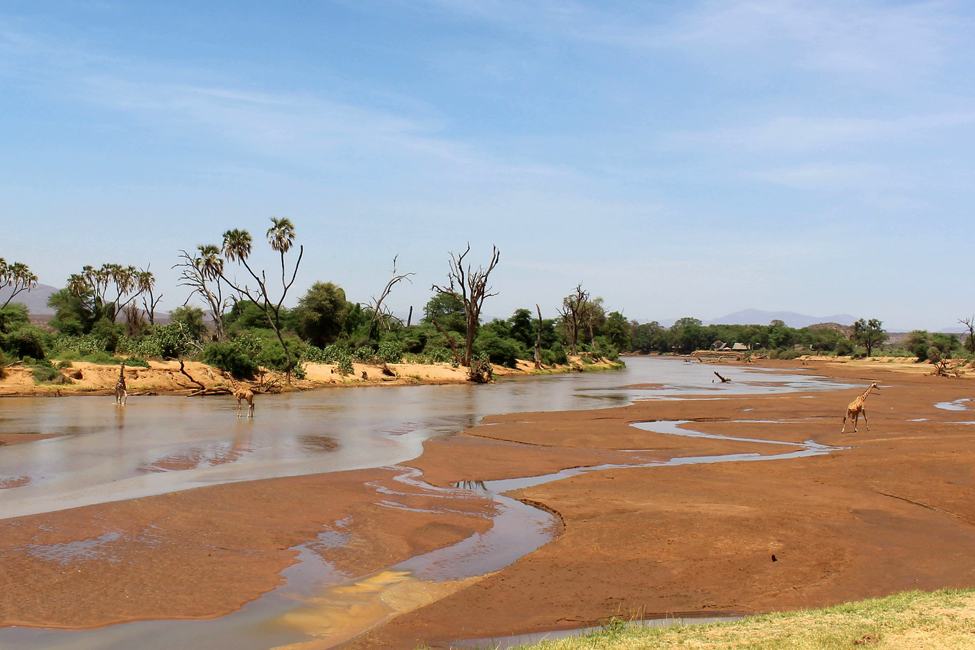
The Ewaso Ng’iro River slows to a trickle during the dry season at Shaba National Reserve.
Staying at Shaba, Samburu or Buffalo Springs
When deciding where to stay, you have lots of options. Samburu is home to several smaller camps, while Buffalo Springs has some larger lodges well-suited to group travel. Shaba is perfect for travelers longing for a sense of seclusion and remoteness.
To clarify—when we say “camp,” we’re not talking about roughing it. Tented camps generally feature permanent tents built on wooden floors, complete with running water and electrical outlets for charging cell phones and camera batteries. You get all the amenities you would in a solid-sided building or villa, but since the canvas “walls” can rolled up for fresh air or down for shade and privacy, you get more of a sense of being right in the thick of the wild.
Ujuzi works with lodges and camps that are committed to sustainable practices, ensuring that tourism benefits both local communities and the environment. By staying at these national reserves, you contribute to the preservation of this incredible ecosystem and support initiatives aimed at protecting wildlife.
Explore Kenya on These Safaris
Visiting Kenya’s Dry Country
Shaba, Samburu, and Buffalo Springs are open to visitors year-round. The weather is rarely terrible, but there are wetter and drier seasons:
- Most safari-goers prefer the dry seasons, when spotting wildlife is easier thanks to grasses dying back and animals congregating around water sources. A short dry season runs from January to February, with a longer dry season from June to September.
- April and November are the wettest months, with frequent afternoon showers (all-day rain is rare). If you’re looking for birds, April and May offer the highest bird counts. It’s also more affordable to visit the reserves during these months.
All three reserves are accessible by road, and airstrips are located right within Samburu and Buffalo Springs National Reserves.
With their diverse wildlife and fascinating landscapes, the national reserves of Shaba, Samburu, and Buffalo Springs make a unique addition to a Kenyan safari. Whether you’re a wildlife enthusiast, a photographer, or a traveler seeking a deeper connection to nature, we invite you to discover the magic of Kenya’s dry country.
Contact Ujuzi to plan your safari!
Sign up for the Ujuzi Newsletter!
From top travel tips to innovative safaris and conservation movement, get inspired to plan your next African safari!